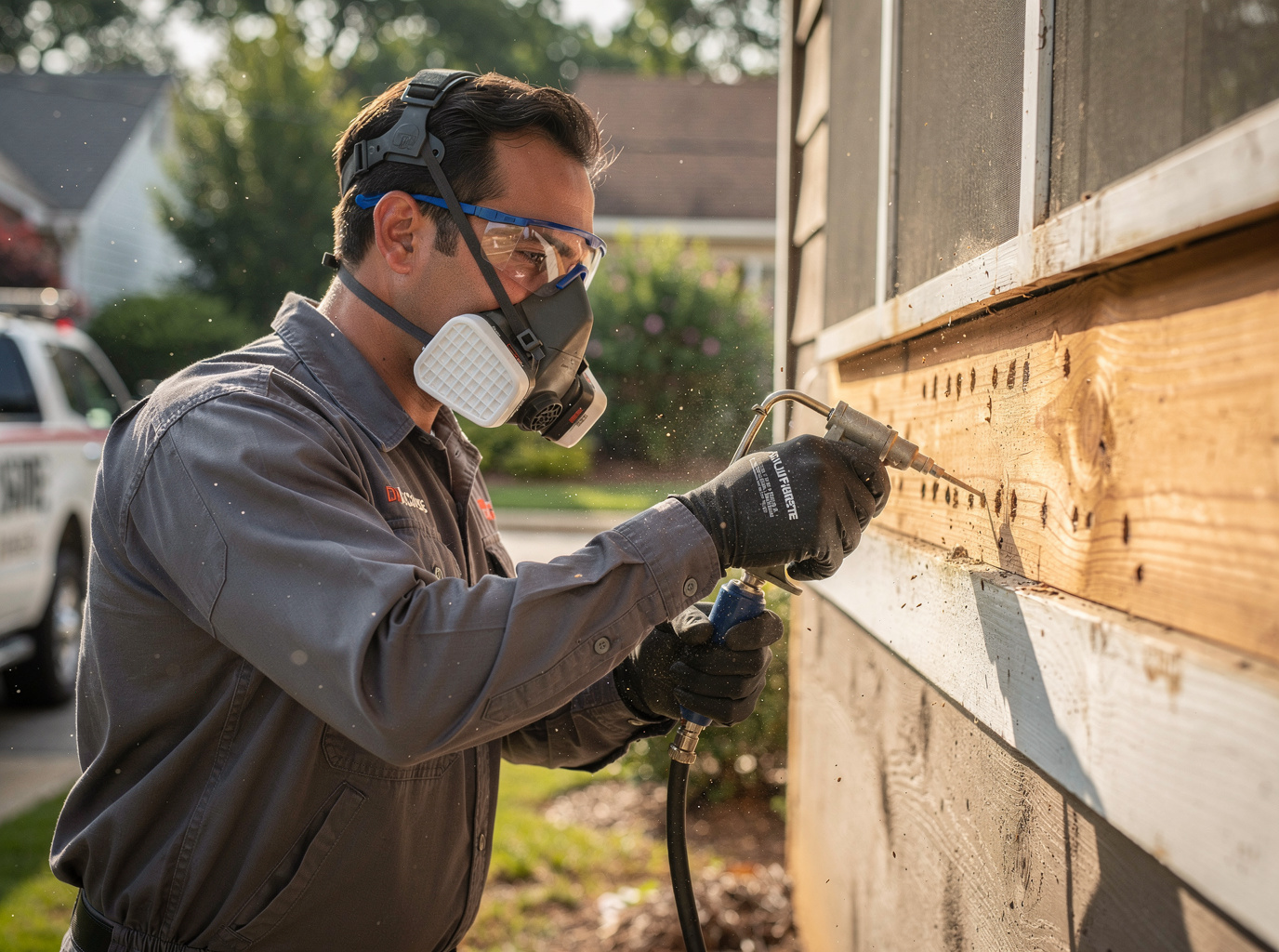
Drywood termites, unlike their subterranean cousins, don't require contact with soil. They can establish colonies directly within the wooden structures of your home, making detection and treatment a unique challenge. In Columbia's humid subtropical climate, especially during our hot summers, these pests thrive, often infesting older homes in neighborhoods like Shandon, Five Points, and Rosewood. Our drywood termite spot treatment focuses on precisely identifying and eliminating these localized colonies, preventing them from spreading and causing more extensive damage. This method is ideal when an infestation is confined to a specific piece of furniture, a section of a wall, or a particular wooden beam, offering a less invasive and often more cost-effective solution than whole-structure fumigation.
Identifying drywood termites often involves looking for tell-tale signs such as fecal pellets (frass), which resemble tiny, gritty sand-like material, or small kick-out holes in wood. Given the age and construction of many properties around the University of South Carolina campus or in Forest Acres, these pests can be a genuine concern. Our approach begins with a thorough inspection to confirm the presence of drywood termites and pinpoint the exact location and extent of the infestation. Once identified, we select the most appropriate spot treatment method, which could range from direct wood injection of termiticides to localized heat treatments, depending on the specific circumstances and the type of wood involved. We prioritize methods that are effective yet mindful of your property and daily life.
Drywood Termite Spot Treatment Near You — Choose Your City
Every city below has its own local Drywood Termite Spot Treatment page with coverage details.
The effectiveness of drywood termite spot treatment in Richland County hinges on accurate identification and precise application. Overlooking even a small, active colony can lead to reinfestation. We understand the construction nuances of homes from the historic Vista district to the more established areas near Finlay Park. This local knowledge allows us to anticipate common hiding spots and access points for drywood termites. While spot treatments are excellent for contained issues, it's crucial to understand that they don't provide whole-house protection against future infestations. We'll discuss preventative measures and ongoing monitoring options to ensure your property remains protected long-term, especially given the consistent termite pressure in our region.
Technician insight
In Columbia, the thing that catches most people out with drywood termite spot treatment is mistaking the frass for sawdust or dirt, especially in older homes in Five Points or Rosewood. By the time they realize it's termites, the localized infestation might be more extensive than they initially thought. Our humid climate means these pests are active year-round, so early detection is key.
Drywood Termites in a Shandon Attic Beam
A homeowner in Shandon called us after noticing small, sandy pellets on their attic floor. Upon inspection, we confirmed drywood termite frass originating from a single, isolated roof support beam. We performed a direct wood injection treatment into the affected beam, eradicating the colony and preventing further structural damage without the need for whole-house intervention.
Drywood Termite Spot Treatment Services We Offer
✓Direct Wood Injection
Precisely inject termiticides directly into infested wood, targeting drywood termite galleries with minimal disruption to your property.
✓Localized Heat Treatment
Apply targeted heat to specific infested areas, effectively eliminating drywood termites without the need for chemical applications in certain situations.
✓Borate Wood Treatment
Treat exposed wood surfaces with borate solutions to prevent and eliminate drywood termite infestations, offering long-lasting protection.
✓Infested Furniture Treatment
Specialized treatments for furniture pieces infested with drywood termites, preventing spread and preserving valuable items.
✓Drywood Termite Frass Identification
Expert analysis of termite droppings (frass) to confirm drywood termite presence and help pinpoint the infestation source.
✓Small Structure Fumigation
For highly localized but inaccessible infestations, we offer targeted fumigation of small, contained structures or items.
Drywood Termite Spot Treatment Cost in South Carolina
| Service | Typical Range | What Affects It |
|---|---|---|
| Small, Accessible Infestation (e.g., single beam, furniture item) | $300–$750 | Price depends on treatment method (injection vs. heat) and accessibility. |
| Medium Infestation (e.g., portion of a wall, multiple small areas) | $700–$1,500 | Cost influenced by total linear feet of infestation and complexity of access. |
| Large or Complex Spot Treatment | $1,400–$3,000+ | For extensive localized damage or difficult-to-reach areas, potentially requiring multiple methods. |
| Drywood Termite Inspection (standalone) | $100–$250 | Inspection fee may be waived or credited if treatment is performed. |
Ranges are typical for South Carolina and confirmed with an exact written quote before any work starts.
How it works
- 1
Detailed Inspection & Confirmation
Our process begins with a thorough inspection of your property, focusing on areas with suspected drywood termite activity. We look for frass, kick-out holes, and other signs to confirm the presence of drywood termites and accurately map the extent of the localized infestation. This is crucial in older homes in areas like Earlewood or Shandon, where wood is a prominent structural element.
- 2
Treatment Plan Development
Based on our inspection findings, we develop a customized spot treatment plan. This plan outlines the most effective method (e.g., direct injection, heat, borate) for your specific situation, considering the location of the infestation, type of wood, and your preferences. We'll explain why a particular method is best suited for your Columbia home.
- 3
Precision Application
Our skilled technicians then execute the treatment with precision. For direct injections, we carefully drill small holes into the infested wood and inject the termiticide. For heat treatments, specialized equipment is used to raise the temperature in the localized area to lethal levels for termites. We ensure minimal impact on surrounding areas.
- 4
Post-Treatment Assessment & Advice
After treatment, we conduct a follow-up assessment to ensure the drywood termite colony has been eradicated. We also provide recommendations for preventative measures and ongoing monitoring to help protect your home from future drywood termite issues, especially important in Richland County's climate.
Pricing
Pricing for drywood termite spot treatment varies based on the size and accessibility of the infested area and the chosen treatment method.