Lancaster, with its mix of historic and newer homes, often presents unique challenges for property maintenance. The area's humid climate, especially during the long summer months, means that moisture management is key to preventing a range of issues. Our team is familiar with the diverse housing stock here, from the established residences around the courthouse to the newer developments on the outskirts.
Navigating Lancaster's local roads and understanding the different property layouts, whether it's a home with a spacious yard or a more compact lot in a residential area, is part of our daily routine. We're equipped to handle the specific conditions found throughout the city, ensuring that our services are effective and tailored to the local environment.
Everything that follows applies right here in Lancaster, SC (29720): the offerings, the process, and the pricing approach we use statewide.
Drywood termites, unlike their subterranean cousins, don't require contact with soil. They can establish colonies directly within the wooden structures of your home, making detection and treatment a unique challenge. In Columbia's humid subtropical climate, especially during our hot summers, these pests thrive, often infesting older homes in neighborhoods like Shandon, Five Points, and Rosewood. Our drywood termite spot treatment focuses on precisely identifying and eliminating these localized colonies, preventing them from spreading and causing more extensive damage. This method is ideal when an infestation is confined to a specific piece of furniture, a section of a wall, or a particular wooden beam, offering a less invasive and often more cost-effective solution than whole-structure fumigation.
Identifying drywood termites often involves looking for tell-tale signs such as fecal pellets (frass), which resemble tiny, gritty sand-like material, or small kick-out holes in wood. Given the age and construction of many properties around the University of South Carolina campus or in Forest Acres, these pests can be a genuine concern. Our approach begins with a thorough inspection to confirm the presence of drywood termites and pinpoint the exact location and extent of the infestation. Once identified, we select the most appropriate spot treatment method, which could range from direct wood injection of termiticides to localized heat treatments, depending on the specific circumstances and the type of wood involved. We prioritize methods that are effective yet mindful of your property and daily life.
How It Works in Lancaster, SC
- 1
Detailed Inspection & Confirmation
Our process begins with a thorough inspection of your property, focusing on areas with suspected drywood termite activity. We look for frass, kick-out holes, and other signs to confirm the presence of drywood termites and accurately map the extent of the localized infestation. This is crucial in older homes in areas like Earlewood or Shandon, where wood is a prominent structural element.
- 2
Treatment Plan Development
Based on our inspection findings, we develop a customized spot treatment plan. This plan outlines the most effective method (e.g., direct injection, heat, borate) for your specific situation, considering the location of the infestation, type of wood, and your preferences. We'll explain why a particular method is best suited for your Columbia home.
- 3
Precision Application
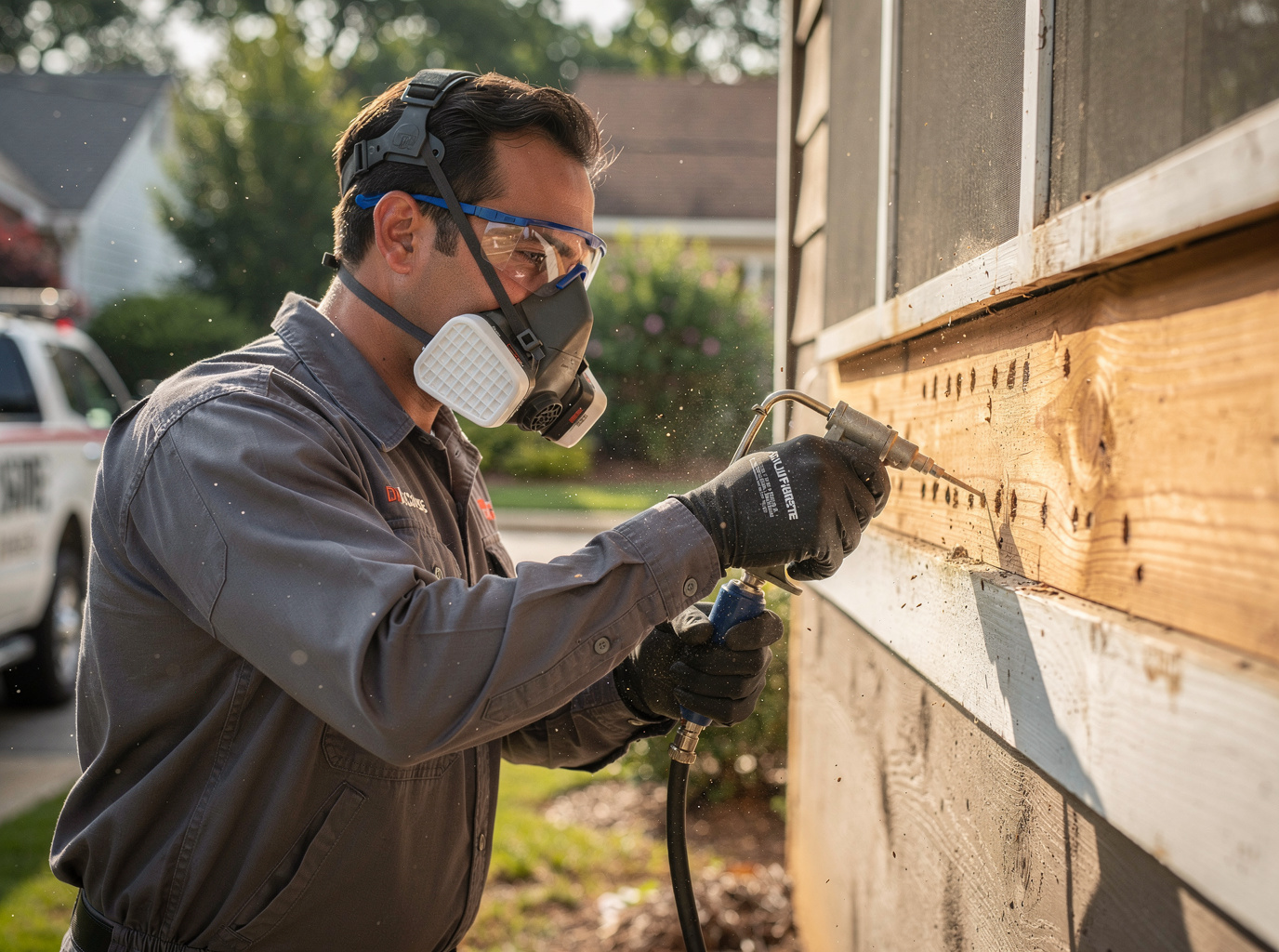
Our skilled technicians then execute the treatment with precision. For direct injections, we carefully drill small holes into the infested wood and inject the termiticide. For heat treatments, specialized equipment is used to raise the temperature in the localized area to lethal levels for termites. We ensure minimal impact on surrounding areas.
- 4
Post-Treatment Assessment & Advice
After treatment, we conduct a follow-up assessment to ensure the drywood termite colony has been eradicated. We also provide recommendations for preventative measures and ongoing monitoring to help protect your home from future drywood termite issues, especially important in Richland County's climate.
Drywood Termite Spot Treatment Services We Offer in Lancaster, SC
✓Direct Wood Injection
Precisely inject termiticides directly into infested wood, targeting drywood termite galleries with minimal disruption to your property.
✓Localized Heat Treatment
Apply targeted heat to specific infested areas, effectively eliminating drywood termites without the need for chemical applications in certain situations.
✓Borate Wood Treatment
Treat exposed wood surfaces with borate solutions to prevent and eliminate drywood termite infestations, offering long-lasting protection.
✓Infested Furniture Treatment
Specialized treatments for furniture pieces infested with drywood termites, preventing spread and preserving valuable items.
✓Drywood Termite Frass Identification
Expert analysis of termite droppings (frass) to confirm drywood termite presence and help pinpoint the infestation source.
✓Small Structure Fumigation
For highly localized but inaccessible infestations, we offer targeted fumigation of small, contained structures or items.
Serving All of Lancaster, SC
We regularly handle drywood termite spot treatment jobs near:
- 📍Lancaster County Courthouse
- 📍Andrew Jackson State Park
- 📍US-521
- 📍Historic Downtown Lancaster
- 📍University of South Carolina Lancaster
Drywood Termite Spot Treatment Pricing in Lancaster, SC
Pricing for drywood termite spot treatment varies based on the size and accessibility of the infested area and the chosen treatment method.
Want the full picture of this service? See our Drywood Termite Spot Treatment page, or everything we do in Lancaster, SC, SC.